

09 Dec How Multimedia Companies Bring Ideas to Life in America
Multimedia Companies Turn Ideas into Experiences in America
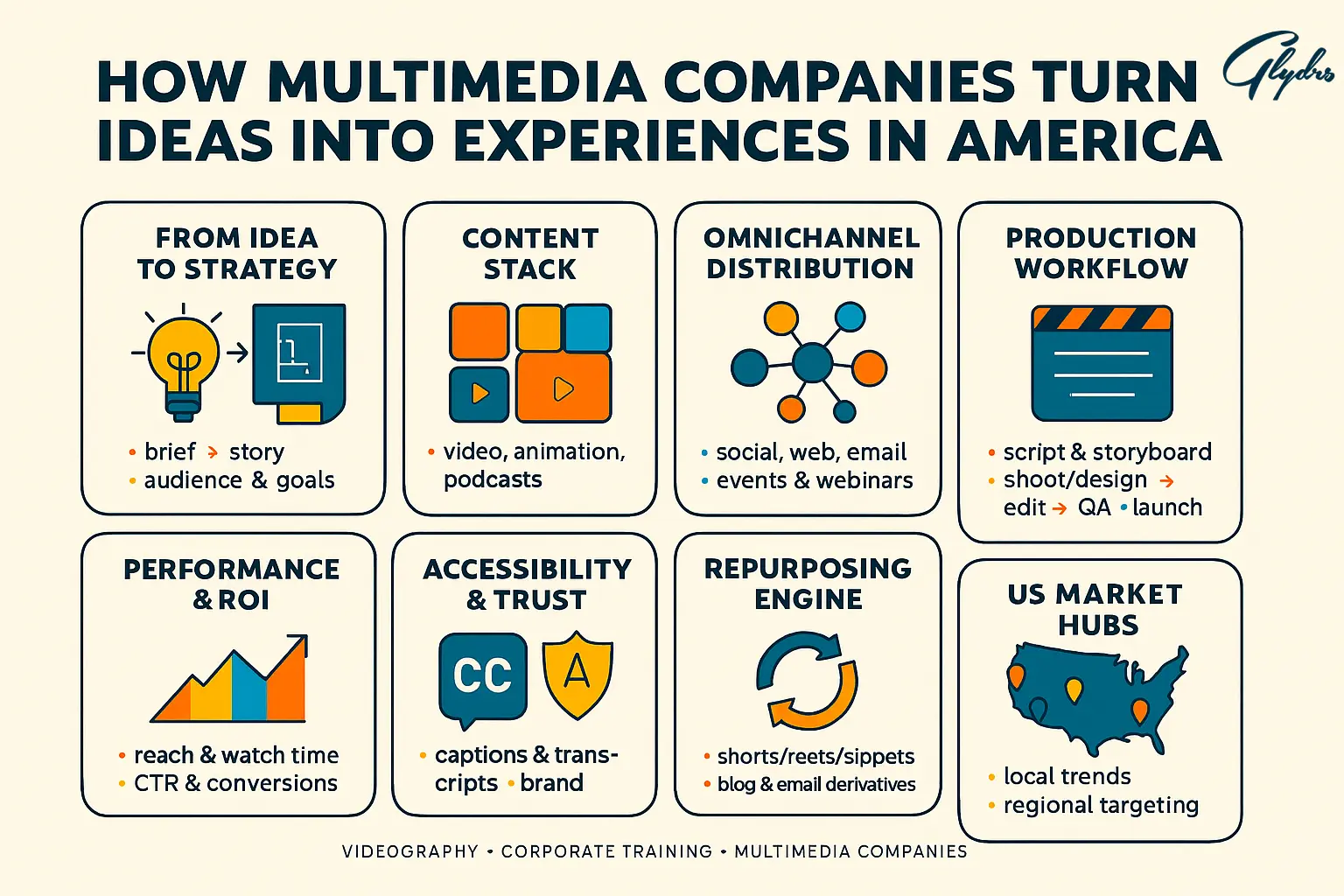
In a country driven by creativity, innovation, and fast-changing technology, multimedia companies have become the silent engines that turn ideas into experiences. Across America, brands, startups, nonprofits, and even solo entrepreneurs rely on these creative teams to translate rough concepts into videos, animations, podcasts, graphics, and interactive content that people actually want to watch and share.
An idea might start as a simple sentence in a meeting or a problem a business wants to solve—more sales, stronger awareness, or better education for their audience. Multimedia professionals take that seed and build a clear story, a visual language, and a content plan around it. They understand how Americans consume media today: scrolling social feeds, watching short-form video, joining webinars, listening to audio on the go, and exploring websites on multiple devices.
Instead of creating one piece of content in isolation, multimedia companies design full ecosystems of content that work together across channels. The result is not just “pretty visuals,” but strategic storytelling that helps brands stand out in crowded markets like New York, Los Angeles, Chicago, and beyond. When done well, this process turns abstract ideas into memorable experiences that move people to click, subscribe, visit, or buy.
Strategy First: Understanding Brands, Audiences, and Channels
To understand how multimedia companies bring ideas to life in America, it helps to look at what happens behind the scenes. The process usually starts with discovery: learning about the client’s goals, audience, brand voice, and the specific challenge they are facing. Do they need to launch a new product, reposition their brand, explain a complex service, or educate a community? Multimedia teams ask questions, analyze competitors, and research how target audiences behave online.
From there, they develop a creative strategy and core message that will guide all content. They decide which formats make the most sense—explainer videos, motion graphics, short social clips, podcast episodes, interactive landing pages, or a mix of all of these. The goal is to match the story to the right medium so that the message feels natural on every platform, whether it appears on Instagram, YouTube, a website, or streaming TV.
This strategic foundation is what separates professional multimedia work from random posts. It ensures that every piece of content is connected, consistent, and designed to help the client reach real business outcomes, not just collect empty views or likes.
From Concept to Storyboard: Shaping the Creative Vision
Once the strategy is in place, multimedia companies in America move into concept development and pre-production, where ideas start to become more concrete and visual. Creative directors, scriptwriters, designers, and producers work together to build storylines, mood boards, and content outlines that match both the brand and the audience. For a tech startup in San Francisco, that might mean clean, minimal visuals and fast-paced explainer videos.
For a healthcare organization in Boston, it could mean empathetic storytelling with patient testimonies and clear educational graphics. During this phase, teams write scripts, sketch storyboards, define key messages, and choose visual styles, color palettes, fonts, and sound direction. They also map out where each piece of content will live—on landing pages, in email campaigns, on TikTok, LinkedIn, or YouTube—to make sure the message fits the culture of each platform.
American clients often need content that speaks to diverse audiences, so multimedia teams pay close attention to inclusivity, accessibility, and cultural nuance. They consider subtitles, voiceover accents, pacing, and representation in visuals to ensure that content feels relatable from California to New York. By the time pre-production is complete, everyone is aligned on what will be created, how it will look and sound, and how success will be measured—whether that’s engagement, leads, sign-ups, or direct sales.
Production in Action: Filming, Animation, and Editing for Every Platform
Production is where multimedia companies turn the plan into real, tangible content that audiences can see and hear. In studios and on location across the United States, videographers, animators, photographers, and audio engineers capture raw material: interviews, product footage, behind-the-scenes clips, voiceovers, and sound effects.
High-quality cameras, lighting setups, and microphones help ensure the final result meets the expectations of American viewers who are used to polished content from streaming platforms and major brands. At the same time, many multimedia teams also create screen recordings, motion graphics, and UI animations that showcase apps, software, or digital services. Once filming and asset creation are done, editors assemble everything into cohesive pieces—cutting video, adding transitions, balancing audio, color-grading, and overlaying titles and graphics.
Designers prepare social media versions, vertical formats for Reels or Shorts, and banner images for websites and ads. Throughout this phase, clients review drafts, share feedback. And approve revisions in cycles, often using online collaboration tools to keep projects moving quickly. The result is a full library of content tailored to American digital habits. Short clips for social feeds, longer videos for websites and webinars. And still assets for ads and email campaigns—all born from a single idea that has been carefully shaped into a multi-channel story.
Data-Driven Creativity: Testing, Optimizing, and Improving Content
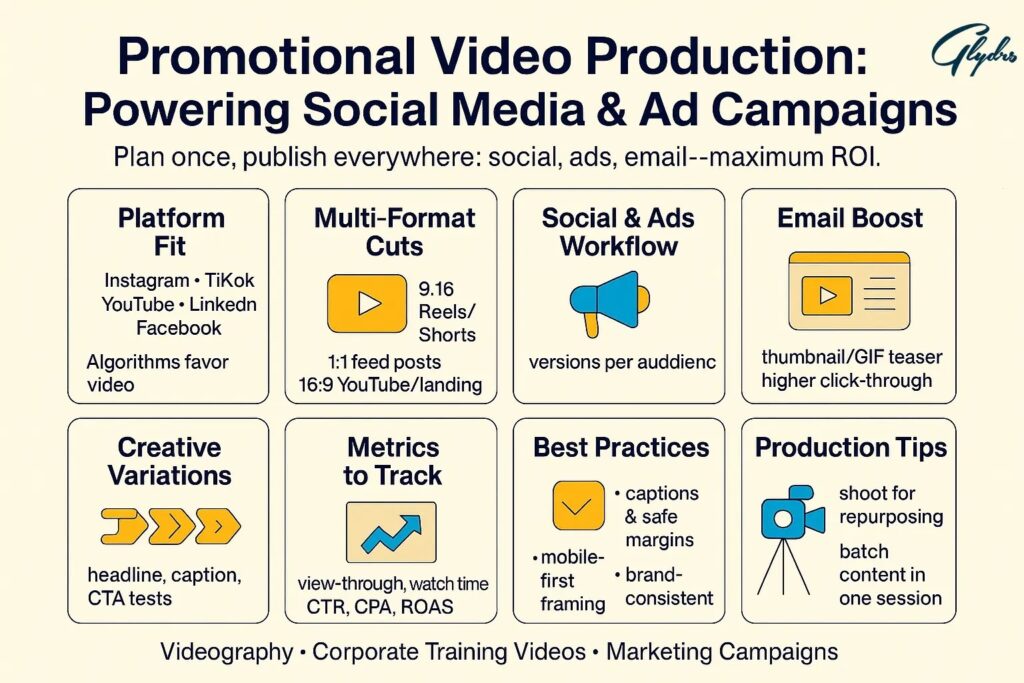
As soon as the first versions are ready, multimedia companies shift their focus to refinement, optimization, and performance. This is where creative work meets data. American audiences are highly fragmented across platforms—Instagram, TikTok, YouTube, LinkedIn, podcasts, streaming TV. So what works in one place may fail in another. To bridge this gap, multimedia teams create variations of the same core idea and test them.
They experiment with different hooks in the first three seconds of a video, alternative thumbnails, headline options, and call-to-action placements. Using analytics tools, they track metrics like watch time, click-through rate, engagement, and conversion. If a product demo video performs well on YouTube but underperforms on LinkedIn, they might shorten it. Reframe the opening, or add captions and a stronger opening question.
This test-and-learn mindset is central to how multimedia companies operate in America. Content is not treated as a one-time output, but as a living asset that can be continuously improved. Clients see clear reports that connect creative choices to business outcomes—more leads. More sign-ups, more booked calls—and this transparency builds trust. Over time, the insights gained from each campaign feed into future projects. So every new idea starts smarter than the last.
Strategic Partners, Not Vendors: Extending In-House Marketing Teams
Another key way multimedia companies bring ideas to life in the U.S. Is by acting as strategic partners rather than just production vendors. In many American businesses, internal teams are stretched thin, juggling marketing, sales, customer success, and operations. Multimedia specialists step in as an extension of these teams. Offering not only production skills but also guidance on messaging, positioning, and long-term content strategy.
They help founders clarify their brand story, marketing teams plan editorial calendars. And sales teams craft assets that support every stage of the buyer journey—from awareness to decision. For example, a B2B brand might need thought-leadership videos for LinkedIn, case study clips for sales calls. And micro-animations for its website. Multimedia companies map these needs into a cohesive plan, ensuring the brand looks and sounds consistent everywhere.
They also bring an outside perspective, spotting opportunities. Or issues that internal teams may miss because they are too close to the product. By combining strategic thinking, creative execution, and data-driven optimization. Multimedia companies help American organizations turn scattered ideas into a clear, compelling content engine that supports growth month after month.
Multimedia for Learning: Training, Onboarding, and E-Learning Content
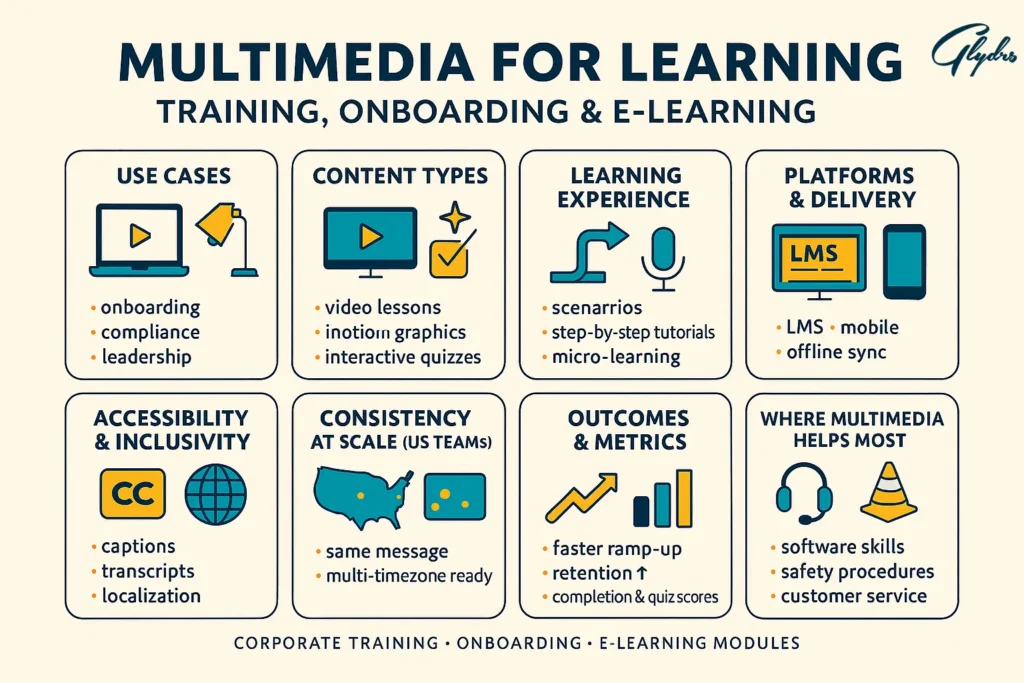
Beyond marketing campaigns, multimedia companies in America play a critical role in education, training, and internal communications. Universities, schools, and e-learning platforms partner with multimedia teams to transform dense material into engaging video lessons, interactive quizzes, animations. And virtual classroom experiences. In corporate environments, HR and L&D departments work with these companies to produce onboarding series, compliance training, leadership development modules. And culture-building content that employees can access on demand.
Instead of reading long PDFs or sitting through boring slide decks. Learners watch scenario-based videos, follow step-by-step tutorials, and interact with branching stories that mirror real decisions on the job. This approach is especially valuable in large, geographically dispersed organizations across the U.S. Where employees may be scattered from California to Texas to New York. Multimedia content allows everyone to receive the same clear message. In the same tone and visual language, regardless of time zone or location.
It also supports different learning styles: some people absorb information best through visuals, others through audio, and others through interaction. By combining these elements, multimedia companies help American businesses and institutions reduce training time, improve retention. And make complex topics easier to understand—whether the goal is teaching software skills. Safety procedures, customer service techniques, or new company policies.
Keep reading and uncover secrets that can change the way you work. The Benefits of Multimedia Production in Video
Staying Agile: Responding to Trends and Change in the U.S. Market
In a digital-first economy, multimedia companies also help American brands stay flexible and resilient when trends shift or unexpected events hit. Consumer behavior in the U.S. can change quickly—new platforms rise, algorithms update. And cultural conversations move from one topic to another overnight. Because multimedia teams are constantly creating and testing content, they are well positioned to respond quickly.
If a brand needs to pivot its messaging, launch a new offer. Or address a public issue, multimedia partners can rapidly script, produce. And publish timely videos, social content, and live streams that feel relevant in the moment. They understand how to adapt a core brand story to different tones. Playful for TikTok, professional for LinkedIn, cinematic for YouTube, or informative for webinars. Many multimedia companies also maintain long-term relationships with their U.S. clients, acting almost like an external creative department.
They schedule recurring content sprints, seasonal campaigns, and ongoing optimization cycles so that brands are never silent for long. This rhythm helps businesses maintain visibility, strengthen trust. And keep conversations going with customers, investors. And communities—even when the market is uncertain. By combining speed, creativity, and strategic insight. Multimedia companies give American organizations the ability to keep their ideas alive and evolving in front of the audiences that matter most.
Keep reading and uncover secrets that can change the way you work. What is the difference between corporate and commercial videography?
Helping Small and Mid-Sized American Businesses Compete and Grow
For small and mid-sized businesses across America, partnering with multimedia companies can be a game-changer in leveling the playing field with larger competitors. A local restaurant, fitness studio, tech startup. Or professional service firm may have great products and passionate teams. But struggle to tell their story in a way that stands out online. Multimedia partners help them clarify their message and turn it into a steady stream of branded content that feels as polished as what big national players produce.
That might include a brand video for the homepage, short vertical clips for Instagram and TikTok. Testimonial videos from happy clients, and simple animated explainers that clarify services in seconds. Because multimedia teams understand U.S. consumer expectations. They know how to balance authenticity with quality—keeping things human and relatable while still looking professional. Many also offer scalable packages and retainer models. So American businesses can start small and grow their content investment over time.
Instead of hiring full in-house teams for video, design, sound, and editing. Companies gain access to a flexible group of specialists who come in when needed. This allows owners and marketing teams to stay focused on strategy, sales, and operations. While knowing that their brand is showing up consistently and creatively wherever their audience spends time online.
Keep reading and uncover secrets that can change the way you work. What Does A production Assistant New York Do?
Why Multimedia Companies Are Essential for Long-Term Brand Success
Ultimately, what makes multimedia companies so valuable in America is their ability to connect imagination with execution. And creativity with measurable results. They don’t just make “content for content’s sake”. They help organizations of all sizes turn abstract goals—more awareness, stronger engagement, higher conversions. Into concrete plans and high-impact visuals.
From the first brainstorming call to the final campaign report. They translate complex ideas into clear stories, choose the right platforms, formats, and styles. And then refine everything based on real performance data. In a fast-moving U.S. market where attention is scarce and competition is fierce. That combination of strategy, craft, and analytics is essential.
Whether a brand is trying to launch nationwide, dominate a local city, educate a niche community. Or nurture long-term customer relationships, multimedia partners provide the creative engine that keeps the message alive and evolving. By working closely with the right team. American businesses can bring their ideas to life in ways that not only look impressive. But also build trust, drive action, and support sustainable growth year after year.
Turn your goals into real achievements with our tailored services – request the service now.
FAQ – Multimedia Companies
1- How do multimedia companies in America turn abstract ideas into real experiences?
Multimedia companies in America start by taking a rough idea—a sentence from a meeting, a business problem, or a big goal—and turning it into a clear story and content plan. They study how Americans actually consume media across social platforms, websites, podcasts, and streaming services, then design a full ecosystem of content (videos, animations, graphics, podcasts, interactive pages) that works together across channels. Instead of creating one isolated asset, they build connected content that appears in the right format on Instagram, YouTube, websites, or streaming TV. The result is not just attractive visuals, but strategic storytelling that helps brands stand out and move people to click, subscribe, visit, or buy.
2- What strategic steps do multimedia companies take before creating content?
Before any filming or design work happens, multimedia companies run a discovery and strategy phase. They learn about the client’s goals, audience, brand voice, and main challenge—whether it’s launching a product, explaining a complex service, or educating a community. They research competitors and audience behavior, then define a core message and decide which formats fit best, like explainer videos, motion graphics, short social clips, podcasts, or interactive landing pages. This foundation ensures that every piece of content is consistent, connected, and tailored to specific platforms, so it delivers real business results instead of just empty views or likes.
3- What happens during the production and post-production stages in U.S. multimedia companies?
In the production stage, multimedia teams capture all the raw material: video interviews, product footage, B-roll, voiceovers, photos, animations, and screen recordings. They use professional cameras, lighting, and audio equipment to meet the high-quality expectations of U.S. audiences. In post-production, editors assemble the footage, cut scenes, add transitions, balance sound, apply color grading, and overlay text and graphics. Designers then adapt each piece into different formats: vertical clips for Reels/Shorts, longer videos for webinars and websites, and still assets for ads and emails. Clients review drafts, give feedback, and approve revisions in cycles, so the final content library is fully aligned with both brand and audience.
4- How do multimedia companies in America use data to improve creative content over time?
Multimedia companies combine creativity with analytics by testing multiple versions of the same core idea. They experiment with different hooks in the first seconds of a video, various thumbnails, headlines, and calls to action. Using analytics tools, they track metrics like watch time, click-through rate, engagement, and conversions across platforms such as YouTube, LinkedIn, TikTok, and Instagram. When a piece underperforms in one channel, they refine it—shortening the length, changing the opening, or adjusting captions. This test-and-learn approach ensures that content is treated as a living asset that’s constantly optimized, and clients see clear reports that link creative decisions to outcomes like leads, sign-ups, and booked calls.
5- Why are multimedia companies considered essential long-term partners for American brands?
Multimedia companies in America do more than produce isolated videos or graphics; they act as strategic partners who extend in-house marketing, sales, and L&D teams. They help clarify brand stories, plan editorial calendars, create training and onboarding content, and maintain a steady flow of high-quality visuals and videos that match U.S. consumer expectations. For small and mid-sized businesses, they offer access to a full creative team without the cost of hiring in-house specialists. Over time, they connect imagination with execution and creativity with measurable results—supporting brand awareness, engagement, conversion, education, and long-term growth. In a fast-moving, competitive U.S. market, this combination of strategy, craft, agility, and data makes multimedia companies a critical engine for sustainable brand success.
No Comments