

10 Dec How to Build a Training Program For an Effective Employee?
Build a Training Program That Creates Effective Employees
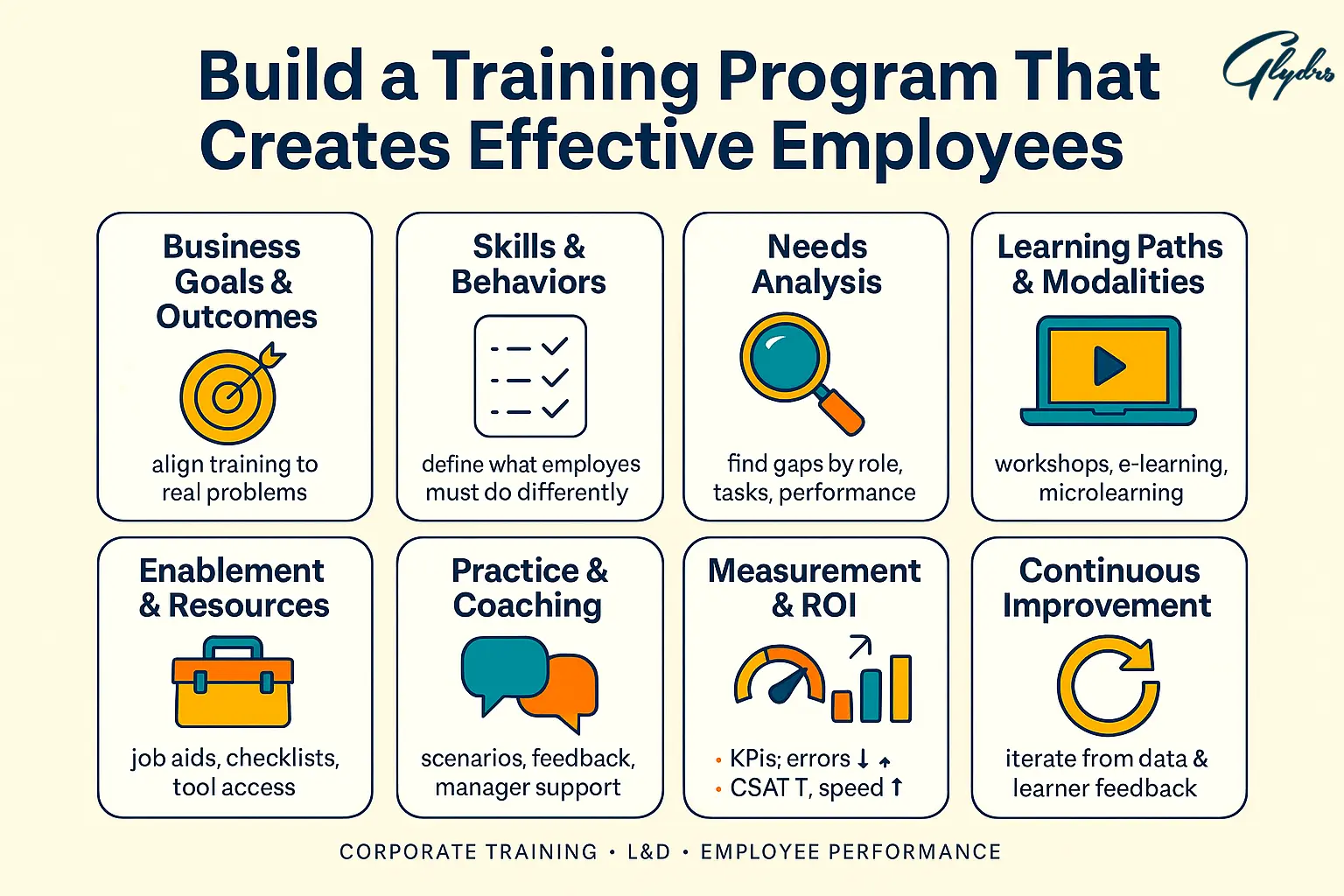
Building a training program for an effective employee starts long before you schedule the first workshop or upload the first e-learning module. It begins with a clear understanding of what your organization is trying to achieve and what skills, behaviors, and mindsets employees need to support those goals. When you set out to build a training program, you are not just filling calendars with courses; you are designing a strategic experience that helps employees perform better, feel more confident, and stay engaged for the long term.
That means every decision—what topics to cover, which tools to use, how long sessions should be—needs to connect back to real performance gaps instead of vague ideas about “improvement.” A strong program always starts with a simple question: what business problems are we trying to solve, and what do employees need to do differently tomorrow to solve them? Once you can answer that, you can define measurable learning outcomes, such as reducing errors, improving customer satisfaction, or speeding up project delivery.
These outcomes act as a blueprint that guides the structure of your training.
The formats you choose, and the resources you provide to help every employee turn new knowledge into daily actions. Without this foundation, even the most advanced learning platform or impressive trainer will fail to deliver lasting impact, because employees will not see how the content relates to their real work. By clearly linking your decision to build a training program with specific, high-value outcomes, you give managers a reason to support the initiative and employees a reason to care.
You also create a clear standard you can use later to evaluate whether your investment in training is actually working. Over time, this strategic clarity turns training from a cost center into a powerful engine for performance, growth, and continuous improvement across your organization.
Identifying Employee Needs and Skill Gaps for Targeted Training
Once you have defined why you want to build a training program, the next step is to understand exactly who the program is for and what they truly need. An effective employee training strategy never assumes that all learners are the same. Instead, it starts with a simple but powerful analysis: what knowledge, skills, and behaviors do top performers already demonstrate, and where are typical employees struggling? You can gather this information by talking to managers, reviewing performance data, observing employees on the job, and even surveying team members about their challenges and expectations.
The goal is to translate broad goals like “better customer service” or “stronger leadership” into specific capabilities, such as handling objections calmly, using systems correctly, or leading a feedback conversation with confidence. When you build a training program around clearly defined competency gaps, you avoid wasting time on content that feels generic or irrelevant. Employees are far more likely to engage deeply when they recognize their daily reality in the scenarios, case studies, and examples you use.
This analysis phase is also the right moment to segment your audience into meaningful groups.
New hires versus experienced staff, frontline employees versus supervisors, technical roles versus customer-facing roles. Each group may need a different starting point, level of detail, or delivery format. For example, new employees may benefit from structured onboarding paths, while experienced staff may prefer short, advanced refreshers focused on new tools or processes. By carefully mapping who needs what, you can build a training program that feels tailored rather than one-size-fits-all.
This not only improves learning outcomes but also signals respect for employees’ time and expertise, which strengthens buy-in before the first session begins. When people see that the design of the program reflects their real roles and pressures, they are more likely to show up fully, practice new skills, and apply what they learn back on the job.
Designing a Structured Learning Journey and Practical Curriculum
When you are ready to build a training program based on clear needs, the next step is to design the structure and curriculum in a way that feels logical and practical to employees. Start by turning your high-level goals into specific learning objectives for each module or session: what exactly should employees know, do, or feel more confident about at the end? Then organize these objectives into a learning journey that moves from foundational knowledge to more advanced application.
For example, you might begin with an overview of a process or tool, then move into realistic scenarios, and finally give employees a chance to practice solving real problems. A strong curriculum uses a mix of formats—short videos, interactive workshops, job aids, quizzes, and real-life case studies—to keep people engaged and support different learning styles. Instead of overwhelming employees with long, one-time sessions, break content into smaller, manageable pieces they can complete over time.
You can also design “just-in-time” resources such as checklists and templates that employees can use at the moment of need. This approach makes learning feel less like a separate event and more like a natural part of daily work. By carefully sequencing topics, balancing theory with practice, and connecting each module to real tasks, you build a training program that employees can follow step by step and actually use on the job, not just pass a test and forget later.
Choosing Delivery Methods and Tools That Fit Real Work Life
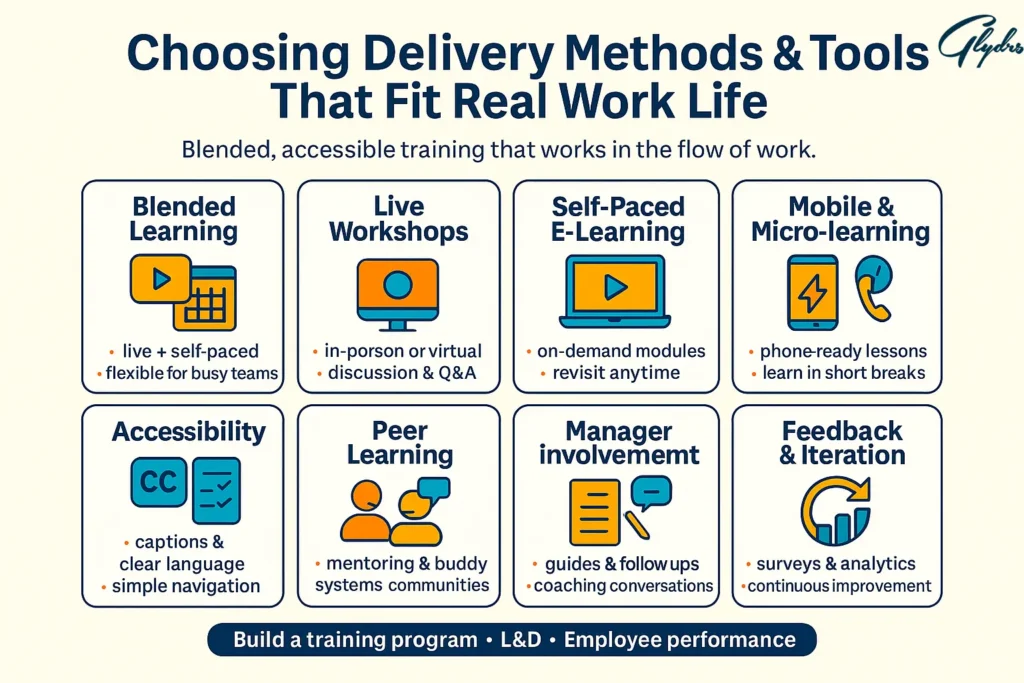
Choosing the right delivery methods and tools is another crucial stage when you build a training program for effective employees. Modern learners are busy and often spread across different locations, so your program must be flexible and easy to access. Consider a blended learning approach that combines live sessions with self-paced digital content. In-person or virtual workshops are ideal for discussions, role plays, and Q&A, while e-learning modules are perfect for foundational knowledge that employees can revisit whenever needed.
A learning management system (LMS) can help you host courses, track progress, send reminders, and gather feedback in one place. You might also include peer learning formats such as mentoring, buddy systems, or communities of practice where employees can share tips and solve problems together. Make sure the content works well on different devices, including mobile, so people can learn during short breaks or while commuting. Accessibility is another key factor: use clear language, captions, and simple navigation so everyone can benefit, regardless of technical confidence.
Finally, involve managers in the delivery process by giving them discussion guides and follow-up activities they can use with their teams. When delivery methods are chosen thoughtfully, you build a training program that fits real-world schedules, supports continuous learning, and makes participation feel convenient rather than burdensome.
Driving Learner Engagement with Relevant, Interactive Training
To truly build a training program that creates effective employees, you must go beyond content and focus on engagement. Even the best-designed curriculum will fail if participants are bored, overwhelmed, or distracted. Engagement starts with relevance: make sure every example, scenario, and exercise reflects the real challenges employees face in their roles. Use case studies from your own organization, anonymized if necessary, so learners can immediately see the connection between training and their daily tasks.
Incorporate interactive elements such as role plays, simulations, problem-solving activities, and group discussions instead of relying only on lectures or slide presentations. Encourage participants to share their own experiences and best practices; this turns training into a two-way exchange, not a one-way download of information. Short knowledge checks and quizzes help reinforce key points and keep attention high, especially in digital modules. You can also use gamification techniques—badges, points, leaderboards, or completion milestones—to add a sense of progress and friendly competition.
When you build a training program with this kind of active participation in mind. Employees are far more likely to remember what they learn, experiment with new behaviors. And carry those behaviors back to the workplace. Engagement is not just about enjoyment. It is a direct pathway to better retention, stronger application. And more effective performance on the job.
Securing Manager Support to Reinforce Learning on the Job
Another critical ingredient when you build a training program is ongoing support from managers and leaders. Training cannot live in isolation inside a classroom or an LMS; it needs reinforcement in the real world. Before the program begins, involve managers by explaining the goals. The skills employees will develop, and how these skills connect to team performance. Encourage them to set expectations with their team members. Such as how much time they should dedicate to learning and how they will apply new skills afterward.
During the program, managers can ask employees what they are learning. Discuss how it relates to current projects, and give them space to practice. After the formal sessions conclude, leaders should follow up with coaching conversations, performance check-ins. And opportunities to apply new capabilities in real-world assignments. You can support this by providing managers with simple tools. discussion guides, observation checklists. And suggested questions they can ask in one-on-one meetings.
Recognizing and rewarding employees who apply new skills—through shout-outs, small incentives. Or visible career opportunities—also reinforces the message that training matters. When leadership actively champions the program rather than treating it as an HR formality, employees take it more seriously. That is how you build a training program that is not just a series of events. But a supported journey from learning to lasting behavior change.
Measuring Training Impact and Continuously Improving the Program
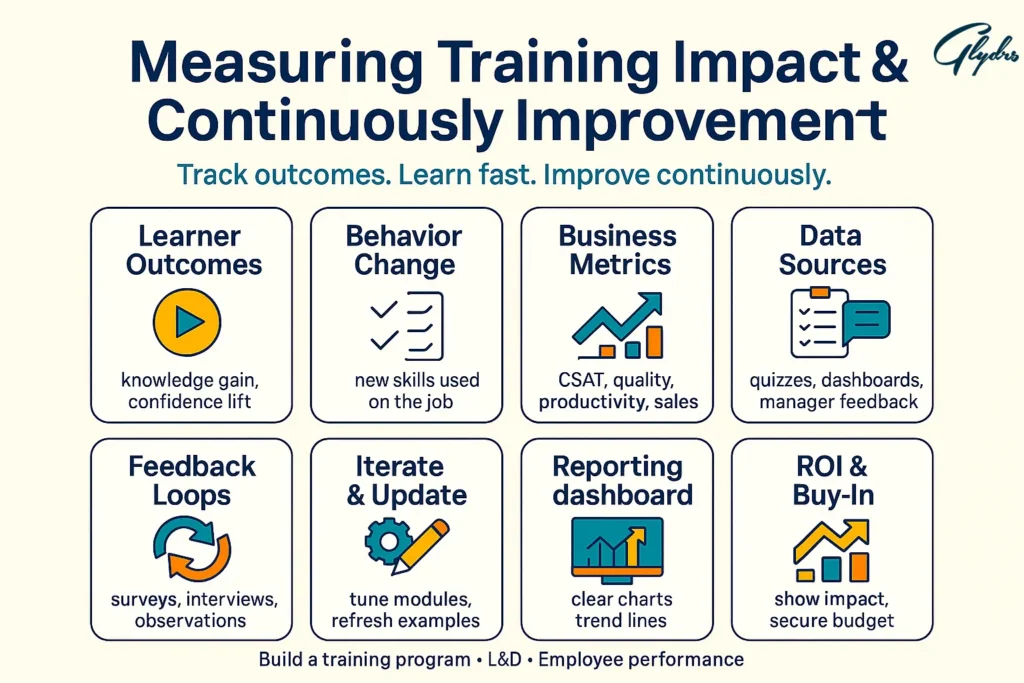
To successfully build a training program that delivers long-term impact. You need a clear plan for measuring results and continuously improving the design. Too many organizations stop at tracking attendance or completion rates. But these numbers say very little about whether employees are actually becoming more effective. Start by defining what success looks like at multiple levels. At the learner level, you can measure changes in knowledge and confidence through quizzes. Self-assessments, and practical exercises.
At the behavior level, look for evidence that employees are using new skills on the job—for example. Fewer mistakes in a process, faster response times. Or more consistent use of a system. At the business level. Connect your training goals to real performance metrics such as customer satisfaction scores. Sales results, productivity, or quality improvements. Use a mix of methods to gather data: surveys, interviews, performance dashboards, manager feedback, and direct observation. Regularly review this information to see which parts of the program are working well and where learners struggle or disengage.
Then, treat your training like a living product—update examples, adjust modules, change formats. Or add new resources based on what you learn. By building feedback loops into your design. You build a training program that gets smarter and more effective over time instead of remaining static and outdated. This continuous improvement mindset also makes it easier to demonstrate the return on investment to senior leaders. Which in turn helps secure future support and budget.
Keep reading and uncover secrets that can change the way you work. What are areas of learning and development?
Using Technology to Personalize and Scale Your Training Program
Modern tools and technology can also make a huge difference when you build a training program for effective employees. Especially in fast-paced or distributed organizations. Learning platforms and analytics tools allow you to personalize training paths based on role, location, previous experience, or performance gaps. For example, new hires might automatically receive a structured onboarding sequence. While experienced employees get targeted microlearning modules that refresh or deepen specific skills. Adaptive learning systems can adjust difficulty based on how quickly someone masters the content. Helping each person move at the right pace.
You can integrate training into tools employees already use—such as intranets, chat apps. Or project management systems—so learning feels woven into daily workflows rather than an extra task. Short how-to videos, searchable knowledge bases, and interactive guides provide on-demand support exactly when people need it. At the same time, technology should enhance human connection, not replace it. Use virtual classrooms, video calls, and online communities to encourage discussion, peer coaching, and cross-functional learning.
When you blend smart technology with thoughtful instructional design and strong leadership support. You build a training program that is scalable, flexible, and responsive to changing business needs. This balance allows employees to keep learning in the flow of work. Which is essential for staying effective in dynamic environments.
Keep reading and uncover secrets that can change the way you work. What is Organizational Training, and how does a DAP simplify it?
Aligning Training Content with Culture, Values, and Behaviors
A truly effective employee training strategy also considers culture and values when building a training program. Technical skills and process knowledge are important. But they are not enough on their own to create high performers who represent your brand well. Use your program to reinforce the attitudes and behaviors that define success in your organization. Collaboration, ownership, innovation, customer focus, or ethical decision-making.
This can be done through storytelling, real examples of great performance, and scenarios that highlight tough choices employees may face. When you design training around your culture, you help employees understand not just what to do. But how and why it should be done in a specific way. This is especially important in areas such as compliance, safety, and data privacy, where mistakes can have serious consequences. You can also involve internal role models—high-performing employees or respected leaders—as guest speakers or case study examples.
Their participation makes the content more credible and relatable. For organizations that operate across multiple locations or countries. A culture-focused approach also ensures consistency. Everyone learns the same core principles and standards, even if examples are adapted to local realities. By aligning skills, behaviors, and values. You build a training program that shapes not only individual performance but also the overall identity and reputation of your company over time.
Keep reading and uncover secrets that can change the way you work. How Can Team Leader Training Enhance Team Performance?
Building a Strategic Training Program That Powers Future Success
In the end, the decision to build a training program for effective employees is really a decision about the future of your organization. Every course, workshop, or learning pathway you create is an investment in how well your people can respond to customers, solve problems. And drive results in a changing environment. A strong program is not built in a single step. It is the outcome of a clear strategy, a deep understanding of learner needs, thoughtful design, engaging delivery. And continuous improvement based on real data.
When all these elements come together. Training stops being a box-ticking exercise and becomes a powerful engine for growth, innovation, and retention. Employees feel supported rather than judged, managers gain teams that are more capable and independent. And leaders see measurable impact on business outcomes.
Whether you are building your first structured program or improving an existing one. The key is to stay focused on real work, real skills. And real results—not just content for its own sake. If you commit to that mindset. Every step you take to build a training program will bring you closer to a workplace where learning is part of everyday life and effectiveness is the natural result.
Turn your goals into real achievements with our tailored services – request the service now.
FAQ – Build a Training Program
1- What is the first step in building a training program that truly creates effective employees?
The first step is to clearly define why you are building the training program and what business problems you want to solve. Instead of starting with topics or tools, you identify the skills, behaviors, and mindsets employees need to support organizational goals. You then translate these into measurable outcomes—such as fewer errors, faster project delivery, or higher customer satisfaction. These outcomes become the blueprint that guides what to teach, how to teach it, and how to measure success. Without this foundation, training feels disconnected from real work and is unlikely to create lasting impact.
2- How can organizations identify employee needs and skill gaps for targeted training?
Organizations should analyze what top performers do well and where typical employees struggle. This can be done by talking to managers, reviewing performance data, observing employees on the job, and surveying staff about their challenges. Broad goals like “better customer service” or “stronger leadership” are broken down into specific capabilities, such as handling objections, using systems correctly, or giving feedback confidently. Based on this, employees are segmented into relevant groups—new hires vs. experienced staff, frontline vs. supervisors, technical vs. customer-facing roles—so each group receives content that matches their level and responsibilities. This targeted approach makes training more relevant, engaging, and effective.
3- What does a structured, practical learning journey look like in an effective training program?
A strong learning journey starts by turning high-level goals into clear learning objectives for each module—what employees should know, do, or feel more confident about. Content is then sequenced from foundational knowledge to real-world application. For example, learners might start with a process overview, move into realistic scenarios, and then practice solving actual work problems. The curriculum mixes formats such as short videos, interactive workshops, quizzes, job aids, and case studies to suit different learning styles. Content is broken into manageable pieces and supported by “just-in-time” resources like checklists and templates. This makes learning feel like part of daily work rather than a one-off event.
4- Which delivery methods and engagement strategies help training fit real work life and keep employees involved?
Effective programs use blended delivery: live sessions (in-person or virtual) for discussion and practice, combined with self-paced e-learning for foundational knowledge. A learning management system (LMS) can host content, track progress, and collect feedback. Peer learning—mentoring, buddy systems, and communities of practice—helps employees share tips and solve problems together. To drive engagement, training uses real company examples, role plays, simulations, group discussions, and short quizzes instead of relying only on slides or lectures. Gamification elements like badges or milestones can add motivation. Involving managers with discussion guides and follow-up activities ensures that learning is reinforced on the job, not forgotten after the session.
5- How can organizations measure the impact of their training program and continuously improve it?
Measuring impact starts with defining success at multiple levels. At the learner level, you track changes in knowledge and confidence through quizzes and self-assessments. At the behavior level, you look for evidence that employees are applying new skills—fewer mistakes, better system usage, faster responses. At the business level, you connect training to performance metrics like sales, productivity, quality, or customer satisfaction. Data comes from surveys, interviews, dashboards, manager feedback, and observation. These insights are used to refine the program—updating examples, adjusting modules, changing formats, or adding resources. By treating training as a “living product” and using technology to personalize and scale it, organizations keep the program aligned with culture, values, and evolving business needs, turning learning into a long-term engine for growth and effectiveness.
No Comments