


17 Dec How to Create a Training Program: Simple Steps
How to Create a Training Program in Simple, Effective Steps
Creating a training program that actually works is less about complicated frameworks and more about following a few clear, practical steps. When you decide to create a training program, you are choosing to shape how people grow, perform, and stay engaged in your organization. The first mistake many companies make is jumping straight into picking courses, tools, or trainers without asking why they are training in the first place.
A strong program starts with a simple question: what business problems are we trying to solve, and what changes in employee behavior or results would show that the training worked? Maybe you want to reduce customer complaints, speed up onboarding, improve leadership skills, or prepare people for a new system rollout. Once those outcomes are clear, you can turn them into specific, measurable learning objectives.
For example, “reduce onboarding time by 20%,” or “ensure frontline staff can resolve 80% of customer issues on the first contact.” These kinds of objectives give focus to your training and help you decide what belongs in the program and what doesn’t. They also make it easier to communicate the purpose of the training to employees and managers, which increases buy-in from the very beginning. When everyone understands that the goal is not just “more training” but better performance and results, you lay a strong foundation for everything that comes next.
Understand Your Learners and Identify Real Skill Gaps
The next step to create a training program is to understand exactly who the training is for and what they need. Not all employees start from the same level of knowledge, experience, or confidence, so a one-size-fits-all approach usually fails. Begin with a simple needs analysis: talk to managers, survey employees, review performance data, and observe how work is currently done. Look for patterns: where do people get stuck, what mistakes keep repeating, and what skills do your top performers already have that others are missing? This analysis helps you define concrete skill gaps instead of vague goals like “improve communication” or “be more proactive.”
You can also segment your audience into meaningful groups, such as new hires, experienced staff, or first-time managers, because each group will need different content and depth. For example, new employees might need structured onboarding modules that explain tools and processes step by step, while experienced staff may benefit more from short, advanced refreshers focused on new techniques or updates.
When you clearly understand your learners and design with their reality in mind, your training instantly becomes more relevant, practical, and respectful of their time. That relevance is what makes people pay attention, participate actively, and actually use what they learn once the session is over.
Design a Simple, Step-by-Step Learning Journey
Once you know your goals and audience, the third step to creating a training program is to design the structure and content in a simple, logical way. Think of this as building a learning journey rather than a collection of random sessions. Start by listing the key topics and skills that learners need in order to meet your objectives. Then arrange these topics from basic to advanced, so each session builds on the previous one.
For example, you might begin with an overview of a process or role, then move into specific tools, followed by realistic scenarios and practice activities. For each module, write a clear learning objective such as “by the end of this session, participants will be able to…”. This keeps the content focused and prevents you from overloading people with information they don’t need. Use a mix of formats—short presentations, demonstrations, group discussions, case studies, and hands-on exercises—to keep the experience engaging and suitable for different learning styles.
Whenever possible, include real examples from your organization so learners can see the direct connection between training and their daily work. By designing a structured, step-by-step curriculum, you create a training program that feels easy to follow, practical, and immediately useful.
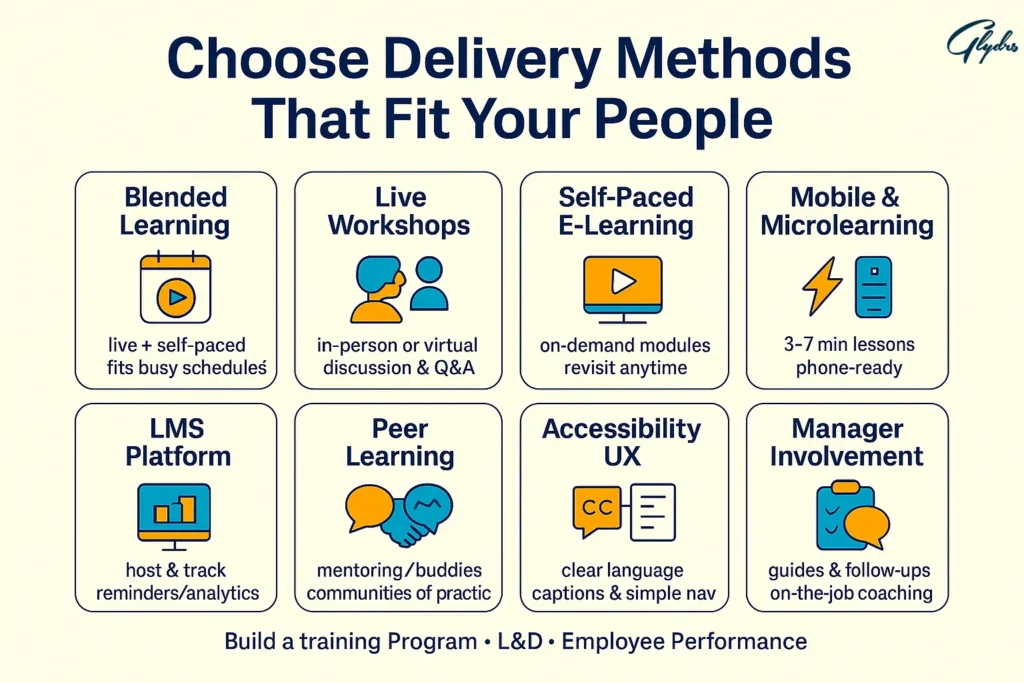
Choose Delivery Methods That Fit Your People and Context
The fourth step in learning how to create a training program is choosing the right delivery methods and tools. Your employees are busy, and many may work remotely or in different time zones, so the program must be flexible and accessible. Consider using a blended learning approach that combines live sessions—either in-person or virtual—with self-paced online modules. Live workshops are ideal for discussions, role plays, and Q&A, while digital modules work well for foundational concepts that people can review at their own pace.
A learning management system (LMS) can help you host content, track progress, and send reminders. Make sure the materials are mobile-friendly, so learners can access them on phones or tablets. You might also include microlearning—short lessons or videos that take just a few minutes to complete—for quick refreshers on key topics.
Don’t forget informal learning: encourage peer-to-peer knowledge sharing, mentoring, or “lunch and learn” sessions where employees teach each other. When you match delivery methods to your people and context, you create a training program that fits naturally into daily work instead of competing with it, making it far more likely that employees will complete and apply what they learn.
Make Training Interactive to Boost Engagement and Retention
A crucial step to creating a training program that actually changes behavior is designing for engagement, not just attendance. People learn best when they are actively involved, not passively watching slides. That means every session should include opportunities for learners to think, practice, and discuss. Instead of long lectures, break content into shorter segments followed by activities such as role plays, small group discussions, problem-solving tasks, and real-life scenarios.
Ask participants to share examples from their own work, reflect on past mistakes, or brainstorm improvements to current processes. Use quizzes and quick polls to check understanding and keep energy high, especially in virtual sessions. You can also add light gamification elements like badges, completion certificates, or friendly competitions between teams to motivate participation. Above all, make sure each exercise clearly connects to real tasks employees perform on the job.
When learners can immediately see how a concept will help them handle a customer call, lead a meeting. Or use a system more efficiently, they are far more likely to pay attention and try new behaviors. By designing interactive experiences instead of one-way presentations, you create a training program that feels dynamic, memorable, and genuinely useful.
Plan Reinforcement so Learning Turns into Daily Habits
Another essential step to create a training program that delivers results is planning how learning will be reinforced after the formal sessions end. Real change does not happen in a single workshop. It happens when employees apply new skills repeatedly in their daily work. To support this, provide simple follow-up resources like checklists, templates, and job aids. And short refresher videos that employees can use “in the moment” when they need them. Involve managers by giving them conversation guides, coaching questions. And suggested follow-up activities they can use in one-on-ones or team meetings.
Encourage them to set expectations with their teams about how new skills should be applied and to recognize employees who are making progress. You can also schedule booster sessions a few weeks after the main training to review key concepts. Answer questions and share success stories. Peer support is powerful too—create channels or groups where participants can ask questions and share tips.
When reinforcement is built into your plan from the start. You create a training program that turns knowledge into lasting habits instead of short-term memory. This is where the real business impact appears: in consistent, improved performance long after the training day is over.
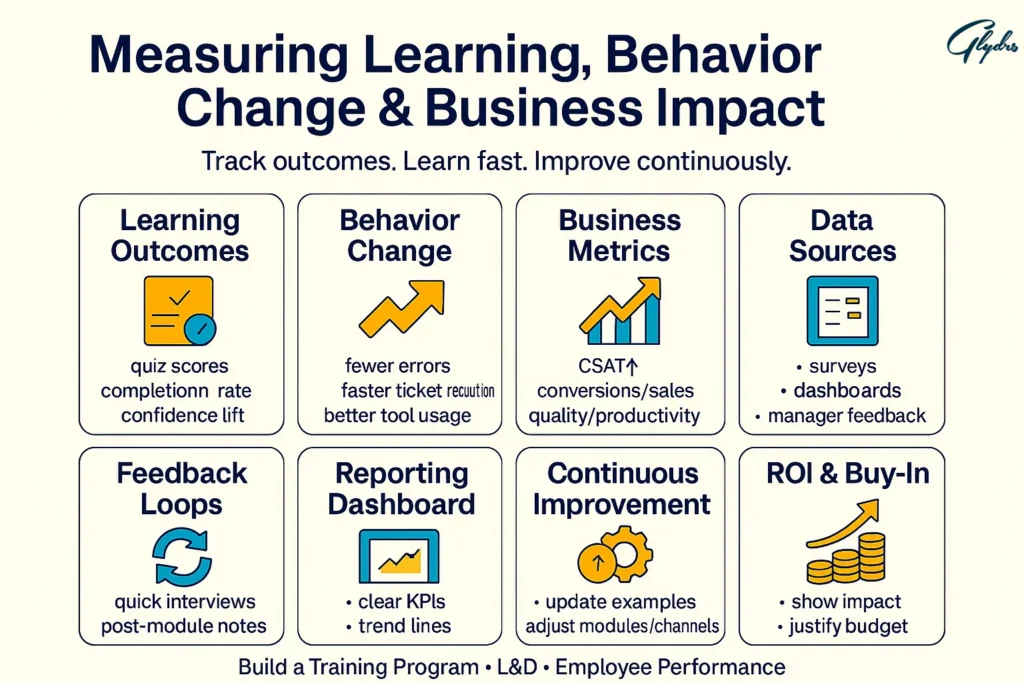
Measure Learning, Behavior Change, and Business Impact
To create a training program that leaders will continue to support. You need a clear and simple way to measure results. Measurement should start with the goals you defined at the beginning. What should employees be able to do better, faster, or more consistently after the training? From there, choose a few meaningful metrics at three levels: learning, behavior, and business impact. At the learning level, you can track quiz scores, completion rates, and self-assessments of confidence.
At the behavior level, look for evidence that people are using new skills. For example, more effective meetings, fewer errors, and faster ticket resolution. Or a better use of tools and systems. At the business level, connect your training efforts to outcomes like higher customer satisfaction. Increased sales, lower churn, or improved quality. Collect feedback from participants and managers through surveys and short interviews. Asking what worked, what felt unclear, and what they have already applied.
Then review these data regularly and use them to make improvements. Update examples. Shorten or expand modules, or adjust delivery methods. When you treat your initiative as a living product rather than a one-time project. You create a training program that gets smarter over time and can clearly demonstrate its value to the organization.
Keep reading and uncover secrets that can change the way you work. What is Organizational Training, and how does a DAP simplify it?
Use the Right Tools and Technology to Keep Training Simple
Another practical step to create a training program that is simple to manage and easy to scale is using the right tools and technology in a focused way. You do not need dozens of platforms; you need a small, well-integrated toolkit that supports design, delivery, and measurement. A learning management system can host content, track progress, and automate reminders. Video conferencing tools enable live virtual sessions with breakout rooms for discussions. Microlearning tools make it easy to deliver short, focused lessons directly to employees’ devices. And survey tools help you quickly gather feedback.
You can also integrate learning into tools people already use. Such as chat apps or project management platforms, by sharing quick tips, checklists. Or short videos in relevant channels. Keep the user experience simple: clear instructions, easy navigation, and a mobile-friendly design. Technology should reduce friction, not create it.
When used well, it allows you to create a training program that feels organized, accessible. And consistent for all employees, whether they are in the office, in the field, or working remotely. This simplicity makes it far more likely that people will actually complete the training and that you can maintain and improve the program without getting lost in complexity.
Keep reading and uncover secrets that can change the way you work. How Can Team Leader Training Enhance Team Performance?
Align Your Training Program with Culture and Core Values
A simple but powerful principle when you create a training program is to make sure it reflects your company’s culture and values, not just its processes. Technical skills, tools, and procedures are important. But they sit on top of deeper expectations about how people should treat each other. Make decisions and represent the brand. Use your training content to reinforce core behaviors like collaboration, ownership, customer focus, inclusion, or continuous improvement.
You can do this by weaving values into stories, examples. And scenarios that mirror real situations employees might face—handling an unhappy client, giving feedback to a colleague. Or choosing between speed and quality under pressure. Invite internal role models or experienced employees to share short case studies of how they lived the company’s values in difficult moments. This makes the training feel authentic rather than theoretical. For global or cross-functional teams. Consistent values in training help create a shared “language” for how work should be done. Even when roles and locations differ.
When culture and skills are aligned, employees do not have to guess what “good” looks like. They can see it clearly in every module, exercise, and discussion. That clarity makes it easier for people to act confidently, make better decisions. And contribute in a way that fits both the job and the organization’s identity. In this way, you create a training program that shapes not only performance but also the atmosphere and reputation of your workplace.
Keep reading and uncover secrets that can change the way you work. How to Build a Training Program For an Effective Employee?
Create a Simple, Repeatable Training System for Long-Term Success
Ultimately, learning how to create a training program is about thinking in simple, repeatable steps rather than chasing complexity. You identify the problem, understand your learners, design a clear learning journey, and choose practical delivery methods. Build engagement and reinforcement, measure the impact, and continually improve. None of these steps requires a huge budget or a giant HR team. They require focus, consistency, and a genuine desire to help people succeed.
When you approach training this way, it stops being a one-time event and becomes an ongoing habit inside your organization. New hires are welcomed with a structured onboarding process, rather than confusion. Existing employees receive regular opportunities for growth, and managers have a clear role in supporting their development. Over time, this builds a culture where learning is normal, feedback is expected. And skills stay aligned with changing business needs.
Employees feel more capable and valued, which boosts retention and motivation, while leaders see concrete improvements in performance and results. In short, when you intentionally create a training program using simple, thoughtful steps, you build a stronger. More adaptable organization—one where training is not just another task, but a key driver of long-term success.
Turn your goals into real achievements with our tailored services – request the service now.
FAQ- Create A Training Program
1- What is the first step to create a training program that actually works?
The first step is to define the business problems you want to solve and the behavior or results that would prove the training worked. These outcomes then become measurable learning objectives that guide all content and design decisions.
2- Why is it important to understand your learners and their real skill gaps?
Because not all employees start at the same level, and one-size-fits-all training usually fails. A needs analysis (talking to managers, reviewing data, surveying staff) helps you target specific gaps, segment audiences, and design training that feels relevant and practical.
3- How do you design a simple, effective learning journey?
List the key topics and skills, then organize them from basic to advanced so each session builds on the last. For each module, define a clear learning objective and use a mix of formats—presentations, discussions, case studies, and practice—to connect directly to real work.
4- What makes training engaging instead of boring and forgettable?
Training becomes engaging when learners are active, not passive: role plays, group discussions, problem-solving tasks, and real-life scenarios. Short segments, interactive activities, and clear links to daily tasks help people remember and actually apply what they learn.
5- How can you measure and improve the impact of your training program over time?
Measure at three levels: learning (quizzes, completion, confidence), behavior (new skills used on the job), and business results (customer satisfaction, sales, quality, speed). Review this data regularly and adjust content, examples, and delivery methods so the program keeps getting better.
No Comments