

03 Dec How Can Team Leader Training Enhance Team Performance?
How Team Leader Training Directly Lifts Team Performance
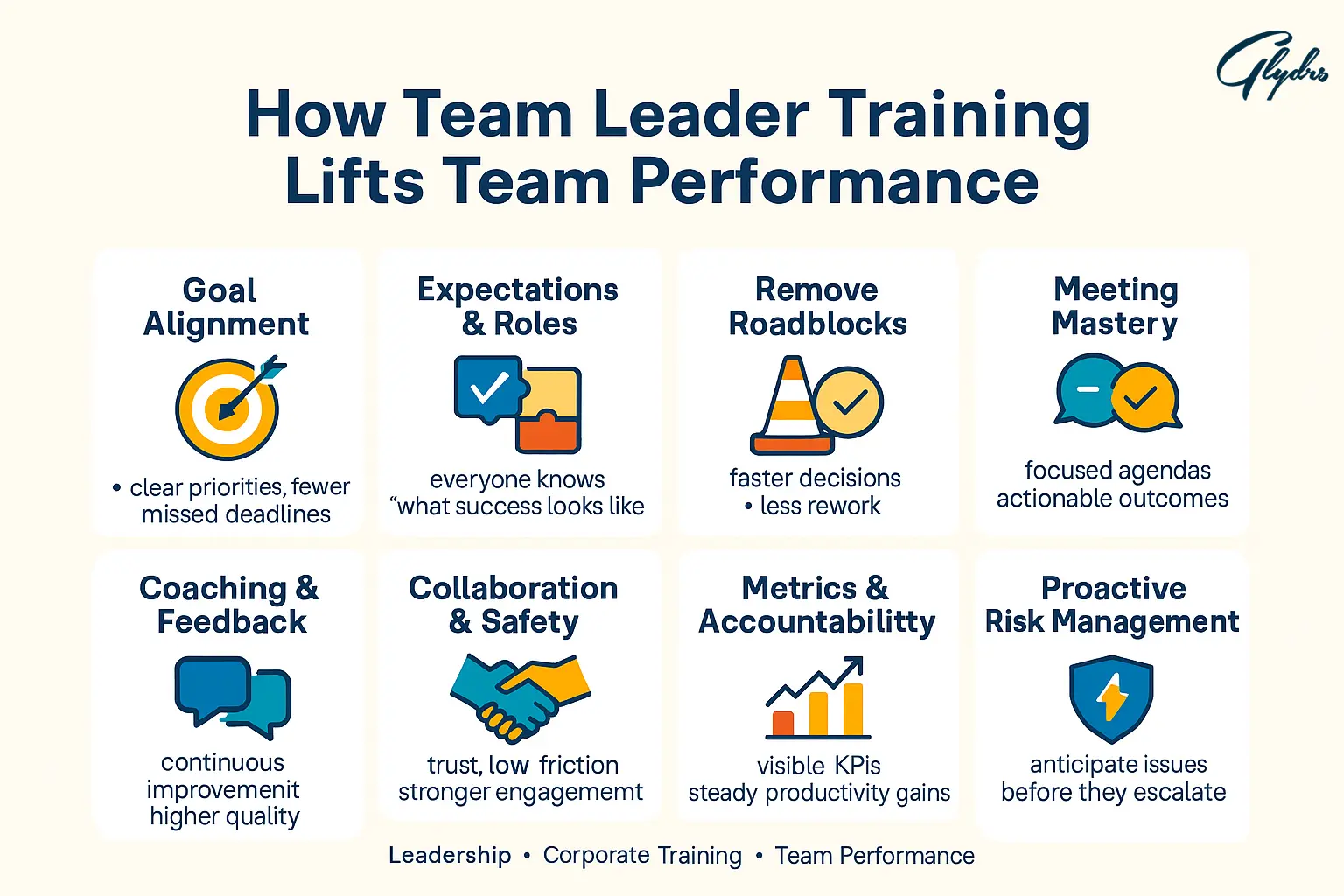
Team performance rarely improves by accident. It grows when someone at the center of the group knows how to guide energy, focus, and collaboration in the right direction. That is exactly where team leader training becomes a powerful strategic tool. Instead of relying on natural talent or trial and error, organizations can intentionally equip team leaders with the skills needed to align people around clear goals, communicate expectations, remove roadblocks, and create an environment where everyone can do their best work.
When leaders are trained, teams gain structure without losing flexibility, guidance without micromanagement, and support without constant firefighting. The result is not just “nicer” teamwork, but measurable improvements in productivity, quality, and engagement. A trained team leader understands how to translate business priorities into concrete daily actions, how to run effective meetings, and how to ensure that each person knows what success looks like. Over time, this clarity reduces confusion, rework, missed deadlines, and interpersonal friction that slow teams down.
Instead of reacting to problems, trained leaders learn to anticipate them, prevent them, and coach people through challenges. This proactive approach is one of the main ways team leader training directly enhances team performance.
What Effective Team Leader Training Actually Focuses On
To understand how team leader training delivers these results, it helps to look at what actually happens in a well-designed program. Effective training does not simply give leaders inspirational quotes or generic theory. It focuses on practical skills such as communication, delegation, coaching, feedback, time management, and conflict resolution—skills that can be used immediately in everyday interactions.
Team leader training also addresses the mindset behind these behaviors: how leaders see their role, how they handle pressure, and how they balance empathy with accountability. Many technically strong employees are promoted into leadership positions with little guidance on how to lead humans rather than tasks.
Training closes this gap by showing new and experienced leaders how to shift from “doing the work themselves” to “getting results through others.” It helps them understand different working styles, motivate diverse personalities, and build trust with their teams. When this skill set becomes part of daily behavior, teams experience fewer misunderstandings, smoother coordination, and a stronger sense of shared purpose—all essential ingredients of high performance.
Strengthening Communication Skills to Align the Whole Team
Team leader training also strengthens one of the most critical drivers of team performance: clear, consistent communication. Many performance issues are not caused by a lack of effort, but by a lack of shared understanding about priorities, responsibilities, and timelines. A well-designed team leader training program teaches leaders how to communicate expectations in a structured way, listen actively, and check for understanding instead of assuming everyone is “on the same page.”
Leaders learn how to run focused meetings with clear agendas and outcomes, how to deliver updates that connect daily tasks to bigger goals, and how to adapt their communication style to different personalities on the team. Training also helps leaders master difficult conversations, such as addressing underperformance or managing resistance to change, without damaging trust.
When leaders communicate more clearly and confidently, teams experience fewer misunderstandings, feel more secure about what is expected, and can move faster with less friction. Over time, this communication foundation becomes a powerful performance multiplier across projects and departments.
Smarter Delegation and Empowerment for Better Results
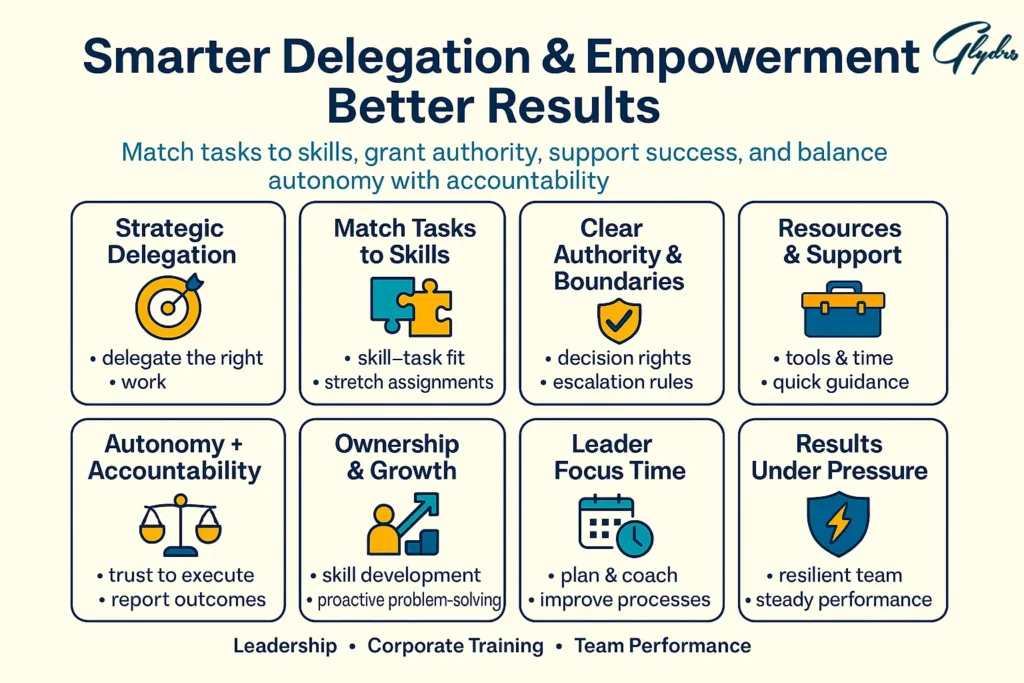
Another major way team leader training enhances team performance is by improving how work is delegated and how people are empowered. Many new leaders either delegate too little, doing most of the work themselves, or delegate poorly by handing off tasks without context or support. Training shows leaders how to delegate strategically: matching tasks to the right skills, clarifying decision-making authority, and providing the resources and guidance people need to succeed.
It also teaches leaders how to balance autonomy with accountability, so team members feel trusted to do their jobs while still being responsible for results. When delegation is done well, team members grow their skills, stay more engaged, and take ownership of outcomes. This creates a culture where people actively solve problems instead of waiting for instructions.
At the same time, the leader gains time and mental space to focus on higher-level priorities such as planning, coaching, and continuous improvement. The result is a more capable, resilient team that performs better even under pressure.
Turning Team Leaders into Coaches Who Develop People
Effective team leader training also transforms leaders into strong coaches who know how to develop people, not just manage tasks. Instead of only measuring results at the end of a project, trained leaders learn how to guide performance throughout the process. They practice giving timely, specific feedback that focuses on behaviors and outcomes rather than personal criticism. Training shows them how to ask powerful coaching questions, help team members reflect on their own decisions, and co-create action plans for improvement.
This coaching approach turns everyday work situations—missed deadlines, customer complaints, process errors—into learning opportunities instead of blame sessions. Over time, team members become more self-aware, more confident, and better able to solve problems independently. A strong coaching culture also supports career growth, because people feel that their skills and contributions are being noticed and developed.
When team leader training equips leaders with coaching tools, teams become more capable, more adaptable, and more motivated to go beyond minimum performance standards. This directly boosts productivity and creates a stronger pipeline of future leaders inside the organization
Building Trust, Motivation, and High Team Morale
Another powerful benefit of team leader training is its impact on trust, motivation, and team morale. High-performing teams are not built on pressure alone; they are built on psychological safety, where people feel comfortable sharing ideas, raising concerns, and admitting mistakes without fear of embarrassment or punishment.
Training helps leaders understand how their words, tone, and decisions either create or damage this safety. They learn how to listen without interrupting, how to recognize contributions publicly, and how to handle mistakes in a way that encourages learning instead of fear. Training also teaches leaders practical strategies for keeping motivation high, such as celebrating small wins, connecting tasks to personal strengths, and explaining how the team’s work supports the organization’s mission.
When people feel valued, respected, and informed, they naturally put more energy and creativity into their work. As a result, teams led by trained leaders tend to show higher engagement, lower turnover. And a stronger commitment to achieving shared goals.
Managing Conflict and Encouraging Stronger Collaboration
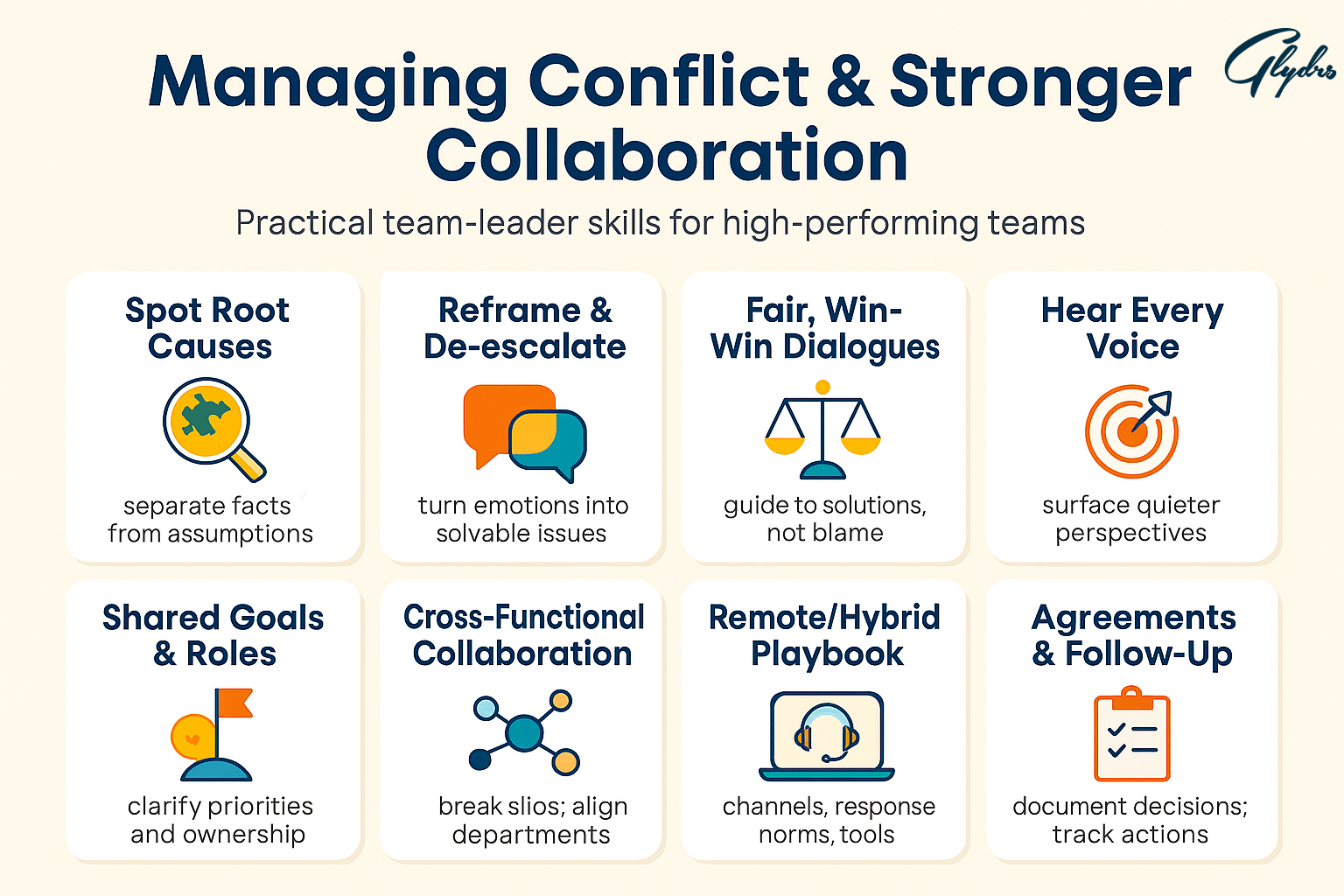
Well-designed team leader training also prepares leaders to handle conflict and strengthen collaboration. Which are both essential for sustained team performance. In any team, disagreements about priorities, working styles, or resources are inevitable. The difference between a struggling team and a high-performing one often lies in how these conflicts are managed. Training equips leaders with practical frameworks to identify the root causes of conflict. Separate facts from assumptions, and guide conversations toward solutions instead of blame.
They learn techniques such as reframing emotional statements into objective issues. Facilitating win–win discussions, and ensuring that quieter voices are heard during debates. In addition, team leader training focuses on collaboration skills such as building shared goals. Clarifying roles and responsibilities, and encouraging cross-functional teamwork. Leaders learn how to break down silos, align different departments. And manage collaboration across remote or hybrid teams using digital tools and clear communication norms.
By reducing unhealthy conflict and promoting constructive collaboration. Team leader training allows the team to spend more time creating value and less time dealing with tension. Misunderstandings, or internal competition that weaken performance.
Keep reading and uncover secrets that can change the way you work. The Future of AI in learning and development
Using Data and Strategy to Guide Team Performance
Beyond interpersonal skills, modern team leader training helps leaders become more strategic and data-driven in how they manage performance. Instead of relying purely on instinct, trained leaders learn to define clear KPIs. Track progress, and use metrics to guide decisions. They understand how to break down organizational goals into team-level objectives and individual targets that are realistic, measurable, and motivating.
Training also teaches leaders how to interpret performance data in context—recognizing patterns, identifying bottlenecks. And distinguishing between short-term fluctuations and deeper systemic issues. With these skills, leaders can make better decisions about workload distribution, process improvements, and resource allocation.
They can spot early warning signs before they turn into serious problems. And they know how to involve the team in analyzing results and brainstorming solutions. When team leader training integrates strategic thinking with practical tools for monitoring performance. It turns leaders into performance architects rather than passive observers. This structured, analytical approach strengthens accountability, speeds up improvement cycles. And leads to more consistent, predictable results across projects and time.
Keep reading and uncover secrets that can change the way you work. What are areas of learning and development?
Leading Teams Through Change and Uncertainty
Finally, effective team leader training helps organizations navigate change and uncertainty with more stability and confidence. Markets, technologies, and customer expectations are constantly shifting, and teams often feel the pressure first. New tools to learn, new targets to hit, and new processes to follow. Without skilled leadership, these changes can create confusion, resistance, and burnout. Training prepares leaders to communicate change clearly, explain the “why” behind new initiatives. And involve team members in shaping solutions wherever possible.
Leaders learn how to manage transitions step by step. Anticipate emotional reactions, and provide the right mix of structure and flexibility. They also develop resilience skills for themselves—managing stress, staying focused under pressure, and modeling calm, constructive behavior.
When leaders are trained to handle change well. Teams are more likely to stay engaged, adapt quickly. And maintain high performance even when circumstances are challenging. This ability to move through change without losing direction becomes a major competitive advantage for the entire organization.
Keep reading and uncover secrets that can change the way you work. What is Organizational Training, and how does a DAP simplify it?
Why Team Leader Training Is a Strategic Investment for Performance
In summary, team leader training enhances team performance by building stronger communication. Smarter delegation, better coaching, higher trust, and more strategic, data-informed decision-making. It turns technically skilled employees into confident leaders who know how to align people around shared goals, manage conflict in a healthy way. And create an environment where individuals can grow while the business achieves measurable results.
Rather than treating leadership as something people either “have or don’t have.” Training treats it as a practical skill set that can be developed over time with the right tools and support. Organizations that invest in structured. Ongoing team leader training do more than improve today’s performance—they build a sustainable culture of learning, accountability. And collaboration that supports future growth.
For any company that depends on teams to deliver value, training its leaders is not an optional extra. It is a strategic necessity that directly shapes productivity, engagement, and long-term success.
Turn your goals into real achievements with our tailored services – request the service now.
FAQ- Team Leader Training
1- How can team leader training directly improve overall team performance?
Team leader training gives leaders practical tools to guide energy, focus, and collaboration in the right direction. Trained leaders learn how to align people around clear goals, communicate expectations, and remove roadblocks that slow the team down. This reduces confusion, rework, missed deadlines, and unnecessary conflict. As a result, teams experience higher productivity, better quality of work, and stronger engagement—because everyone knows what success looks like and how to achieve it together.
2- What are the main skills that effective team leader training focuses on?
Effective team leader training focuses on practical, day-to-day leadership skills rather than abstract theory. Core topics typically include communication, delegation, coaching, feedback, time management, and conflict resolution. Training also helps leaders shift their mindset from “doing the work themselves” to “getting results through others.” By understanding different working styles and learning how to motivate diverse personalities, leaders can build trust, reduce misunderstandings, and create smoother coordination across the team.
3- How does team leader training strengthen communication and collaboration inside the team?
Team leader training teaches leaders how to communicate expectations clearly, structure meetings with defined outcomes, and check for understanding instead of assuming everyone is aligned. Leaders learn to adapt their communication style to different personalities, handle difficult conversations without damaging trust, and keep everyone focused on shared goals. Training also shows leaders how to manage conflict constructively, reframe emotional issues into practical problems, and ensure all voices are heard. This combination of clear communication and healthy conflict management leads to stronger collaboration and fewer misunderstandings across projects and departments.
4- In what ways does team leader training help leaders develop their people and build a high-morale team?
Through team leader training, leaders learn how to act as coaches, not just supervisors. They practice giving timely, specific feedback focused on behaviors and outcomes, and they learn to use everyday challenges as learning opportunities instead of blame sessions. Training also shows leaders how to recognize contributions, build psychological safety, and connect tasks to individual strengths and career goals. When people feel respected, supported, and developed, they become more confident, more motivated, and more willing to go beyond minimum performance standards—raising overall team morale and performance.
5- Why is team leader training considered a strategic investment for long-term business success?
Team leader training turns technically strong employees into leaders who can translate business priorities into clear goals, measurable KPIs, and actionable plans for their teams. Trained leaders use data to guide decisions, anticipate problems, and manage change in a way that keeps people engaged rather than burnt out. This creates more consistent, predictable results and a stronger pipeline of future leaders. Over time, investing in team leader training builds a culture of accountability, learning, and collaboration—directly impacting productivity, engagement, retention, and the organization’s ability to grow in a changing environment.
No Comments